

Braces
Correct crowding, gaps, and bite issues with trusted, effective braces precise, reliable results even for the most complex cases.
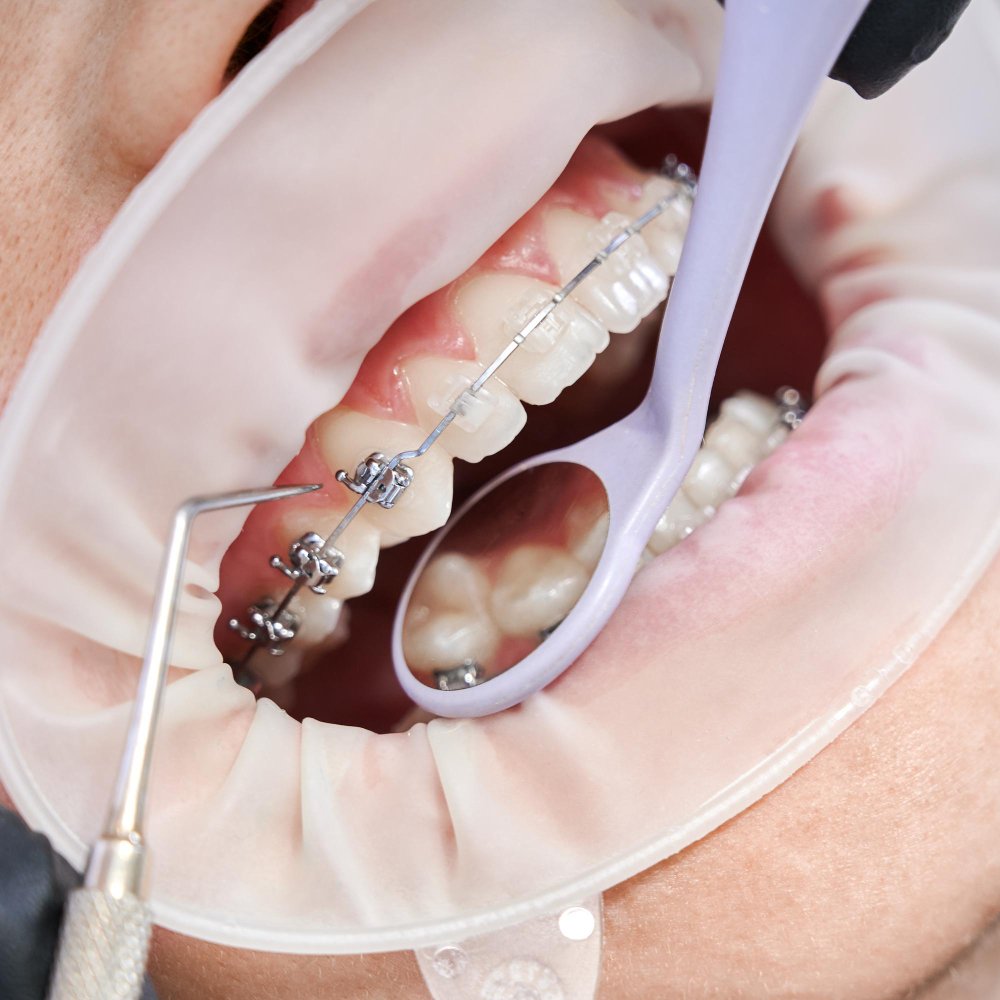
What Are Braces?
Precise, reliable straightening for every case
Traditional braces use small brackets bonded to each tooth, connected by an archwire that applies continuous, controlled pressure to gradually guide teeth into their correct position. Because the pressure is constant and fully in your dentist's control, braces remain one of the most reliable ways to treat even complex crowding, spacing, and bite issues.
For patients who'd prefer a less visible option without giving up that same level of control, ceramic braces use tooth-coloured brackets that blend in far more than traditional metal while working exactly the same way.
Throughout treatment, regular adjustment visits let your dentist fine-tune the wire tension and monitor progress, keeping your smile moving steadily toward its final result.
Why Choose Braces
Precision you don't have to think about
Braces remain a trusted, effective choice especially for cases that need more than a removable aligner can offer.
Handles Complex Cases
Fixed brackets and wires give precise control over even significant crowding, rotation, and bite corrections.
Ceramic Option Available
Tooth-coloured ceramic brackets offer a more discreet look without compromising on treatment control.
Continuous, Predictable Progress
Constant, controlled pressure moves your teeth steadily, with progress checked and adjusted at every visit.
No Daily Compliance
Because braces are fixed in place, there's no tray to remember, remove, or lose treatment keeps working around the clock.
Durable & Reliable
A well-established, proven treatment method with decades of clinical results behind it.
Affordable, Proven Option
For many complex cases, braces remain a more cost-effective route to a fully corrected bite than other options.
Is It Right For You?
Who braces work best for
Braces suit a wide range of cases your dentist will confirm what's right for you at your consultation.
- Good Candidates For Braces
- Significant crowding or tooth rotation
- Complex bite issues (overbite, underbite, or crossbite)
- Younger patients whose jaws are still developing
- Cases needing precise, continuous control throughout treatment
- Relapse after previous orthodontic treatment
- May Need Additional Treatment First
- Active gum disease or untreated tooth decay, which should be addressed before starting
- Very young patients still waiting for more permanent teeth to come in
- Certain jaw conditions that may need a specialist referral
- Patients who may struggle to maintain oral hygiene around fixed brackets
Every case is different a full assessment at your consultation will confirm the best treatment plan for your smile.
Ready When You Are
Straighten your smile with confidence
Book a consultation and X-ray to find out if braces are the right fit for your case.